Home Blog Page 2

ADNOC, Temasek join Global Infrastructure Partners in $30b infrastructure push

0
GIP ADNOC Temasek

Global Infrastructure Partners, ADNOC, Temasek and investment firm L’IMAD are launching a new infrastructure investment partnership targeting up to $30 billion of investments across the Gulf Cooperation Council, Central Asia, and selected Middle East and North Africa markets.

The partnership will focus on sectors including energy, transportation, logistics, digital infrastructure, water, and waste management, according to a joint announcement.

The strategy will raise a combination of equity and debt capital for infrastructure investments, targeting both greenfield and brownfield assets capable of generating long-term cash yield and risk-adjusted returns.

The move comes as Gulf sovereign investors and global asset managers increase exposure to infrastructure assets amid rising demand driven by urbanisation, population growth, industrial expansion, digitalisation, and energy security initiatives across the region.

Global Infrastructure Partners, which was acquired by BlackRock last year, manages more than $200 billion in assets across infrastructure sectors including energy, transport, digital infrastructure, water, and waste management.

“We are pleased to establish this partnership with L’IMAD, ADNOC and Temasek to deepen our longstanding commitment to investing across the GCC and Central Asia region,” said Bayo Ogunlesi, chairman and chief executive officer of Global Infrastructure Partners.

The proposed platform underscores growing investor appetite for long-duration infrastructure assets in the Gulf and broader MENA region, where governments are accelerating economic diversification and private-sector participation in strategic infrastructure development.

The partners said the platform would seek high-quality infrastructure opportunities capable of supporting long-term economic growth and regional connectivity.

DEG provides $45m loan to Yapi Kredi Leasing for green, blue SME finance in Türkiye

0

DEG, the private-sector investment arm of German development bank KfW, has provided a $45 million senior loan to Türkiye’s Yapi Kredi Leasing to support green and blue economy financing for small and medium-sized enterprises.

The five-year facility, which includes a one-year grace period, will be used to finance climate-smart SME projects across Türkiye, according to project document seen by DevFiNews.

At least 15% of the loan will be set aside for blue economy projects, including investments aimed at reducing ocean plastic pollution, supporting marine ecosystem restoration and promoting eco-friendly tourism.

The transaction gives Yapi Kredi Leasing access to longer-term funding at a time when such capital remains scarce in Türkiye, where tight monetary policy and high inflation have constrained financing conditions for companies.

Yapi Kredi Leasing, formally Yapi Kredi Finansal Kiralama A.O., was established in 1987 and merged with Koç Leasing in 2006.

The company provides leasing solutions for machinery and equipment to SMEs and corporates and has been the market leader in Türkiye’s financial leasing sector for more than a decade.

DEG said the loan will allow the company to on-lend to SMEs investing in sustainable sectors, including renewable energy and energy-efficiency equipment.

The leasing sector is viewed as a practical channel for climate finance because it directly funds machinery, equipment and industrial assets. F

or SMEs, leasing can also reduce the upfront cost of acquiring energy-efficient equipment or renewable energy systems.

The financing comes as Türkiye seeks to reshape its energy mix by reducing dependence on imported gas and increasing renewable energy capacity.

The country will need an additional $68 billion in investment between 2022 and 2030 to significantly reduce greenhouse gas emissions and meet its climate goals, according to the Türkiye Country Climate and Development Report.

The loan also reflects a broader push by development finance institutions to work through local financial intermediaries to expand climate finance to smaller businesses, which are often difficult for international lenders to reach directly.

By backing Yapi Kredi Leasing, DEG is channelling long-term capital into real-economy investments while supporting climate-linked lending through Türkiye’s leasing market.

DEG proposes $40m financing for Salvadoran sugar producer CASSA

0
DEG CASSA

DEG, the investment arm of German state-owned development bank KfW, is proposing a $40 million financing package for Salvadoran sugar producer Compañía Azucarera Salvadoreña S.A. de C.V., according to project documents seen by DevFiNews.

The proposed investment will fund efficiency upgrades and refinance short-term debt, as development lenders continue to back sustainable agribusiness projects in emerging markets, DEG said.

The proposed investment will allocate $21 million to capital expenditures linked to the company’s 2025/2026 harvest season and improvements at its sugar processing facilities.

The remaining $19 million will be used to refinance revolving short-term credit lines and strengthen CASSA’s capital structure.

Founded in 1964, CASSA is one of El Salvador’s largest sugar producers. The company operates two sugar mills with combined sugar cane plantations of around 34,000 hectares and a processing capacity of 21,100 metric tons of cane per day.

Both mills also operate cogeneration plants capable of producing 107,400 kilowatt-hours of electricity per day, enough to supply around 200,000 households in El Salvador.

DEG said the financing will support an important employer in the country’s sugar industry. CASSA provides about 10,300 jobs, 16% of which are held by women, and sources from more than 3,000 local sugar cane suppliers.

The financing combines growth and refinancing capital, a structure often used by development lenders to help emerging-market companies modernise operations while easing short-term funding pressures.

CASSA has been investing in technological and agricultural upgrades to improve productivity and meet international environmental and social standards.

The company holds certifications including Bonsucro and Fairtrade and generates renewable energy through its cogeneration facilities.

DEG said it will support CASSA’s efforts to further strengthen its environmental and social standards. The investment is expected to contribute to SDG 7 on affordable and clean energy, SDG 8 on decent work and economic growth, and SDG 12 on responsible consumption and production.

The transaction underscores growing DFI interest in financing agricultural processing companies that combine rural employment, renewable energy generation, and supply-chain resilience.

Temasek backs Pinegrove venture debt strategy amid tighter equity markets

0
Photo by Frederick Warren on Unsplash.

Singapore state investor Temasek has partnered with Pinegrove Credit Partners to expand venture debt financing for technology and life sciences companies, as private credit gains ground as an alternative funding source for startups facing tighter equity markets.

The partnership will focus on providing flexible, minimally dilutive financing to growth-stage companies across sectors including artificial intelligence and compute infrastructure, defence, space, energy, robotics, enterprise software, healthcare and life sciences, according to an announcement.

Financial terms were not disclosed.

Pinegrove Credit Partners is the venture debt and private credit arm of Pinegrove Venture Partners, which is backed by Brookfield and HRTG Partners. Pinegrove has more than $12 billion in assets under management across venture debt, fund investments, co-investments and venture secondaries.

The firm said its venture debt funds have deployed more than $4.5 billion across about 580 loans to over 450 growth-stage companies since 2012. Since March 2025, its existing fund vehicles have closed or signed term sheets on 37 loans totaling about $700 million in commitments.

The deal underscores growing interest among sovereign and institutional investors in private credit strategies linked to the innovation economy. Venture debt has become more relevant as later-stage startups seek capital without raising highly dilutive equity rounds or waiting for IPO markets to reopen more fully.

Temasek, which had a net portfolio value of S$434 billion ($324 billion) as of March 31, 2025, has been increasing exposure to long-term themes such as digitisation, sustainable living, future consumption and longer lifespans.

Pinegrove also has a long-standing relationship with Silicon Valley Bank, now a division of First Citizens Bank. The firm has worked with SVB’s venture lending platform since 2012 and formalised a strategic lending relationship in December 2024.

The partnership adds to a broader expansion of private credit into technology financing, particularly in sectors such as AI infrastructure, energy transition and deep technology, where companies often require large amounts of capital before reaching profitability or public-market readiness.

Why we cover this

The partnership highlights how private credit is becoming an increasingly important source of capital for technology and innovation-driven companies as traditional venture funding becomes more selective. It also reflects growing interest among sovereign and institutional investors in financing models tied to AI infrastructure, energy transition, healthcare, and other strategic sectors that require significant long-term capital.

UK National Housing Bank backs Starlight rental housing fund to crowd in private capital

0
National Housing Bank Starlight
A rendering of Starlight Investments’ build-to-rent development in Basildon, UK.

Canada-based Starlight Investments has secured backing from the UK government’s National Housing Bank for its second build-to-rent fund, in one of the first transactions by the newly established vehicle as England seeks to draw more private capital into housing.

The National Housing Bank, which operates within Homes England, has joined Starlight UK Build-to-Rent Fund II as a cornerstone investor. The size of the commitment was not disclosed.

The investment will support the delivery of about 6,000 rental homes across England, including in Manchester, Liverpool, Leeds and commuter-belt markets around London, where rental supply remains tight.

For the UK government, the deal is an early test of whether the National Housing Bank can use public capital to bring more institutional investors into housing and regeneration projects.

The bank was set up to deploy flexible, government-backed capital across funds, platforms and partnerships, with the aim of accelerating housing delivery at scale.

Britain has been grappling with a chronic housing shortage, while higher borrowing costs and affordability pressures have kept more households in the rental market for longer. Policymakers are increasingly looking to pension funds, insurers, sovereign investors and asset managers to help finance new housing supply.

The transaction reflects a broader shift in housing finance, where public agencies are using cornerstone commitments and partnership structures to lower perceived risks and crowd in long-term private capital.

Starlight has been expanding in the UK residential market since 2020, focusing on build-to-rent housing in large regional cities and undersupplied commuter markets.

The Toronto-headquartered firm currently has about 4,000 homes and £1.1 billion in UK assets under management.

Globally, it owns, develops and manages more than 70,000 multi-residential suites and over 7 million square feet of commercial property, with CAD 30 billion in assets under management.

Build-to-rent has become an increasingly important part of the UK housing market as home ownership becomes less accessible for many households.

For institutional investors, the asset class offers exposure to long-term rental income backed by demand in urban markets.

Starlight said its second UK fund builds on its earlier build-to-rent strategy and will focus on professionally managed rental housing in locations close to employment, education and transit.

The company said the fund has also received commitments from a broader base of global institutional investors.

Homes England said the investment is intended to support housing delivery while helping attract private capital. Simon Century, chief executive officer of the National Housing Bank, said Starlight’s approach to development and institutional ownership of mid-market rental housing aligns with the bank’s place-based priorities.

The investment adds to the growing role of development-style finance in housing, where public capital is being used not only to fund projects directly but also to shape markets and mobilise private investment into sectors considered socially or economically important.

Turkven targets $400m for Türkiye PE fund as FMO eyes first-close commitment

0

Turkven’s Türkiye-focused private equity fund TPEF V is targeting $400 million in commitments, as the firm looks to back mid-market companies exposed to digital growth and hard-currency revenues.

Dutch development bank FMO is considering a commitment to the fund at first close, according to disclosure documents. The size of FMO’s proposed investment was not disclosed.

TPEF V will continue the strategy of Turkven’s predecessor fund, investing in high-growth companies in Türkiye’s mid-market.

The fund will focus on businesses benefiting from digital adoption, as well as companies with hard-currency revenues, a key consideration in a market exposed to currency volatility and inflationary pressures.

For development finance institutions, the transaction reflects a broader strategy of using private equity funds to channel long-term risk capital into emerging-market companies that may struggle to access institutional funding directly.

FMO said its proposed commitment is aimed at supporting private-sector-led growth and job creation by expanding the availability of equity capital for mid-sized companies in Türkiye.

The investment will qualify under FMO’s Reducing Inequalities label, which covers transactions intended to improve access to capital and economic opportunity in underserved markets.

The Dutch DFI has had a relationship with Turkven since 2002 and has invested in three of its predecessor funds.

Its participation at first close is also intended to send a positive signal to other potential limited partners and help the fund attract additional institutional and commercial capital.

The first-close commitment is significant because DFI participation can help emerging-market fund managers raise capital from other investors, particularly during periods when commercial LP appetite is more selective.

Türkiye’s mid-market remains an important target for private capital investors because of the country’s large domestic market, export base and growing digital economy.

At the same time, macroeconomic volatility has made investor selection more focused, with fund managers prioritising companies that can generate foreign-currency revenues or scale beyond the domestic market.

TPEF V has been classified as Category B+ under FMO’s sustainability framework, reflecting potential environmental and social risks across its underlying investments.

Turkven has existing environmental and social processes based on IFC Performance Standards, according to the disclosure.

FMO said it will support the fund manager in strengthening those systems, managing contextual risks and identifying opportunities for value creation across the portfolio.

FMO weighs up to $75m loan to Azerbaijan’s AccessBank for MSME lending

0
FMO AccessBank
Photo from AccessBank's website.

Dutch development bank FMO is considering a four-year loan of up to $75 million to Azerbaijan’s AccessBank to support lending to micro, small and medium-sized enterprises, including women, youth and agriculture borrowers, according to documents seen by DevFiNews.

The proposed multi-currency facility will comprise a committed tranche of $40 million and an uncommitted tranche of $35 million, according to FMO disclosure documents.

The loan will allow AccessBank to raise funding in both Azerbaijani manat and US dollars, giving the lender medium-term capital to expand its loan book and improve its balance sheet structure.

AccessBank is a mid-sized Azerbaijani bank focused on MSME and retail customers. It has around 1,700 employees, 39 branches, total assets of about $1 billion and capital of roughly $138 million.

The bank has been an FMO client since 2007, making the proposed loan part of a long-running relationship between the Dutch development finance institution and one of Azerbaijan’s specialist MSME lenders.

FMO said the full amount of the facility will be used to finance microentrepreneurs and SMEs, with a focus on women, youth and agriculture borrowers. The investment is aimed at expanding access to finance for smaller businesses, which often face tighter credit conditions than larger corporates in frontier and emerging markets.

The deal also gives AccessBank access to longer-tenor funding at a time when development finance institutions are using partner banks to channel capital into underserved segments of the economy.

The project has been classified as Category C under FMO’s sustainability framework, meaning it is expected to have minimal or no adverse environmental and social risks. AccessBank will be required to apply the EDFI Exclusion List as well as local environmental and social laws and regulations.

Proparco commits $15m to Lightrock’s Latam impact fund

0
Proparco Lightrock

French development finance institution Proparco has committed $15 million to Lightrock Latam Fund II, expanding its exposure to climate and impact-focused companies in Latin America.

The commitment brings Proparco’s total exposure with Lightrock to $25 million, including a previously announced $10 million co-investment in ComBio, a Brazilian renewable thermal energy company, the firms said in a statement.

Lightrock Latam Fund II invests in businesses across energy transition, resource efficiency, access to essential services and productivity-related sectors.

The latest commitment shifts Proparco’s relationship with Lightrock from a single-company co-investment to a broader fund platform targeting growth-stage companies across the region.

Proparco’s earlier investment in ComBio marked its first direct equity investment in Brazil’s climate sector and was aimed at supporting industrial decarbonisation through renewable thermal energy solutions.

Stéphane Froissardey, deputy head of investments at Proparco, said the commitment builds on the institution’s previous co-investment with Lightrock and broadens their collaboration in Latin America.

Lightrock’s head of Latin America, Marcos Wilson Pereira, said Proparco’s backing reflects confidence in the firm’s strategy of investing in companies addressing regional challenges while seeking commercial returns.

Financial details of Lightrock Latam Fund II were not disclosed.

The transaction adds to a growing pipeline of DFI-backed fund commitments targeting climate, energy transition and essential services in emerging markets.

Proparco, Atlantic Group sign MoU to support African private-sector projects

0
Proparco Atlantic Group

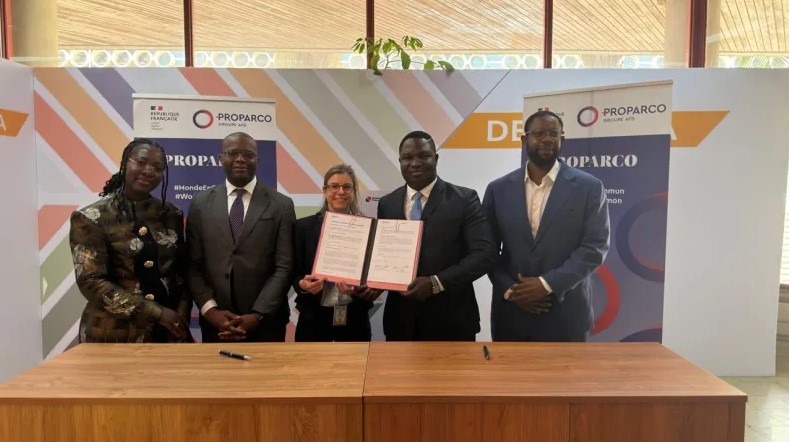
French development finance institution Proparco has signed a memorandum of understanding with pan-African conglomerate Atlantic Group to explore financing and operational support for projects spanning financial services, agribusiness, cement and mining across Africa.

The agreement, signed during the Africa Forward Summit in Nairobi on May 11-12, sets a framework for a long-term partnership between Proparco, the private-sector financing arm of Agence Française de Développement Group, and Atlantic Group.

Under the framework, Proparco may deploy financing instruments, guarantees and technical assistance to support projects led by Atlantic Group and its subsidiaries.

The proposed cooperation targets sectors tied to Africa’s real economy, including industrial activity, financial inclusion and job creation. Atlantic Group operates across several African markets, with businesses in financial services and industrial sectors.

“Proparco’s trust is a recognition of our commitment to developing our markets and promoting local expertise,” Atlantic Group CEO Abissa Kouakou said.

Proparco CEO Françoise Lombard said the partnership reflects the institution’s aim to support African groups with strong regional footprints and potential to deepen financial inclusion.

Financial terms were not disclosed. As an MoU, the agreement does not represent a confirmed financing transaction, but could pave the way for future funding, guarantees or technical assistance tied to Atlantic Group’s businesses.

The deal comes as development finance institutions increasingly work with regional private-sector groups to expand investment in African industries, improve access to finance and support economic transformation.

FMO weighs $11.5m financing for Kenya avocado oil producer Origen

0
Origin FMO

Dutch development bank FMO is considering an $11.5 million debt facility for Kenya-based avocado oil producer Origen Fresh EPZ to expand processing capacity and support cleaner, circular manufacturing operations, according to project documents seen by DevFiNews.

The proposed package includes $10 million in committed financing and an additional $1.5 million uncommitted tranche.

The funds will support the construction of a solvent extraction plant that will allow Origen to recover more oil from avocado pomace, a byproduct of avocado processing.

The expansion will also enable the company to replace firewood with pomace-based biomass energy, lowering emissions and improving resource efficiency.

Founded in 2020, Origen sources avocados from smallholder farmers and aggregators across East Africa and processes them into organic and conventional avocado oil for customers in North America, Europe and Asia.

FMO said the investment would support inclusive economic growth by improving market access for smallholder avocado farmers while helping Origen build a more resource-efficient operating model through agricultural waste utilization.

Development finance institutions have increasingly backed African agribusiness processors as they seek to strengthen local value-added manufacturing, rural incomes and climate-resilient supply chains.

The project has been classified as Category B+ under FMO’s environmental and social framework.

Key risks relate to labor and working conditions, occupational health and safety, pollution prevention, waste management, supply-chain biodiversity and physical climate risks.

FMO said mitigation measures would be implemented through an environmental and social action plan aligned with several IFC Performance Standards, including those covering labor, resource efficiency, community health and biodiversity conservation.

Kenya has become one of Africa’s largest avocado exporters, with processors seeking to move further up the value chain through products such as avocado oil amid rising global demand from food and cosmetics manufacturers.