Home Blog

IFC eyes €20m investment in BlackPeak fund to back Southeast Europe SMEs

0
IFC BlackPeak
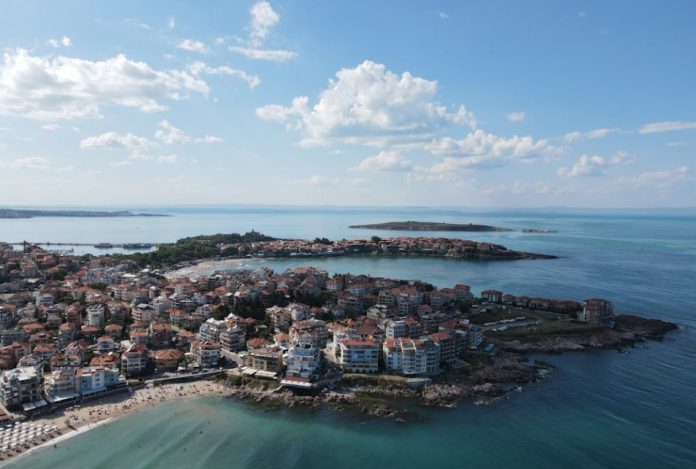
Bulgaria photo by Magi Dobreva on Unsplash.

The International Finance Corporation (IFC) is considering an equity investment of up to 20 million euros ($22.6 million) in a Southeast Europe-focused private equity fund managed by BlackPeak, as development finance institutions look to channel more institutional capital into underserved emerging European markets.

The proposed investment would support BlackPeak SEE Growth Equity Fund II SCSp, also referred to as BlackPeak III, a Luxembourg-domiciled private equity vehicle targeting total commitments of 150 million euros, according to an IFC disclosure.

The fund plans to invest mainly in small and medium-sized enterprises and lower mid-market companies across Bulgaria, Romania, Serbia, Croatia and other Southeast European markets.

It will pursue a generalist strategy focused on sectors including information technology, niche manufacturing, business services, retail and consumer industries — segments where many companies remain constrained by limited access to long-term growth capital.

IFC said its proposed commitment would be critical in helping the fund reach its first close and final target size, reflecting the continued difficulty of fundraising in Southeast Europe.

Fundraising activity in Southeast Europe accounted for only about 6% of Europe’s overall fundraising between 2020 and 2024, IFC said, highlighting the region’s relatively shallow institutional private capital market.

The World Bank Group member said the project is expected to improve access to private equity financing for SMEs while supporting value creation and expansion opportunities for portfolio companies, including women-led businesses.

Beyond financing individual companies, IFC framed the investment as part of a broader market-building effort aimed at strengthening local private equity ecosystems and encouraging greater institutional investor participation in future regional funds.

BlackPeak is an existing IFC client. IFC and other development finance institutions backed BlackPeak’s previous fund, launched in 2021, helping the manager evolve into a regional fund platform.

Under IFC’s environmental and social framework, the fund has been classified as FI-2, meaning potential environmental and social risks are considered low to medium. The fund will exclude coal-related activities, radioactive materials, involuntary resettlement, and higher-risk projects with significant environmental, community, biodiversity, cultural heritage, labour or occupational safety impacts.

As part of the proposed investment conditions, BlackPeak will be required to strengthen its environmental and social management system, improve tools for managing gender-based violence risks, update grievance procedures, maintain ESG capacity, and provide due diligence reports for the fund’s first three investments.


HBL set to launch Pakistan’s first commercial bank green bond with IFC backing

0
Habib Bank IFC

Pakistan’s Habib Bank Limited (HBL) is set to issue the country’s first green bond by a commercial bank, with the International Finance Corporation (IFC) proposing an investment of up to $100 million to support climate-related lending in the South Asian nation.

The proposed investment, structured as a private placement with a tenor of up to five years, is expected to support HBL’s inaugural green bond issuance and expand financing for eligible green and climate projects in Pakistan, according to an IFC project disclosure seen by DevFiNews.

The transaction highlights growing efforts by development finance institutions to deepen sustainable finance markets in emerging economies through local financial institutions and capital markets.

HBL, Pakistan’s largest bank by branch network, operates more than 1,700 branches across the country.

Its main shareholder is the Aga Khan Fund for Economic Development, which holds a 56.6% stake, while British International Investment, the UK government’s development finance institution, owns nearly 5%.

IFC said the proposed investment would help deepen Pakistan’s still-limited green bond market and support the adoption of international standards for climate-focused financing.

If completed, the issuance would mark the first green bond by a commercial bank in Pakistan, creating a potential benchmark for other lenders seeking access to long-term climate finance funding.

IFC said the project could also encourage broader adoption of international green finance practices through demonstration and replication effects.

The proceeds of the bond are expected to finance green, blue, and climate-related projects, primarily in the energy and water sectors, while potentially supporting electric vehicle adoption initiatives.

The investment also includes a blended finance component. IFC plans to mobilise up to $50 million from international private credit insurers under its Managed Co-Lending Portfolio Program (MCPP FIG III), helping HBL diversify its long-term funding sources and scale its climate finance activities.

Alongside the financing, IFC said it would support HBL in aligning the issuance with the International Capital Market Association’s Green Bond Principles and local regulatory requirements.

The institution also plans to provide technical support to strengthen the bank’s green bond framework, climate project assessment capabilities, and sustainability reporting processes.

The project has been categorised as FI-1 under IFC’s Environmental and Social Sustainability Policy due to potential risks associated with underlying climate-related sub-projects.

IFC said HBL already has an established environmental and social management system integrated into its credit approval processes, though further enhancements are planned, including due diligence frameworks for solar supply chains and improvements to grievance mechanisms.

The proposed investment remains subject to IFC approval.

Banpais set to secure $130m facility for SME, climate lending in Honduras

0
Banpais
Honduras photo by Harold Mendoza on Unsplash.

Honduran lender Banpais is set to secure a proposed $130 million IFC-led financing package to expand lending to small businesses, women-owned enterprises, and sustainable finance projects, including renewable energy, in Honduras.

The package comprises a $95 million senior loan facility, including $25 million from the International Finance Corporation (IFC)’s own account and $70 million from parallel lenders, as well as a $35 million subordinated loan from IFC to strengthen Banpais’ regulatory capital.

The proposed investment underscores the role of development finance institutions in using local banks to reach underserved businesses and build climate finance capacity in emerging markets.

Headquartered in San Pedro Sula, Banpais is among Honduras’ five largest banks, with a market share of more than 12% by total assets.

The bank operates more than 90 branches and over 4,000 service points. It is majority-owned by Bicapital Corporation, the holding company of Bicapital Group and owner of Banco Industrial, Guatemala’s largest bank.

IFC said the facility would support Banpais’ lending programme for small and medium-sized enterprises, including women-owned SMEs, as well as sustainable finance projects.

The financing is also expected to help the bank offer longer-term loans and broaden its funding sources through the participation of parallel investors.

The climate finance component gives the transaction a broader market-building angle. IFC expects Banpais to become an early adopter of Honduras’ 2025 national green taxonomy, supporting the identification and reporting of climate finance and potentially encouraging other local financial institutions to align with the framework.

The proposed facility will also support renewable energy lending, which IFC said could help Honduras improve energy security and advance its goal of increasing the share of renewable electricity.

Alongside the financing, IFC is expected to provide advisory support to strengthen Banpais’ climate finance portfolio, environmental and social risk management, and alignment with IFC Performance Standards.

The project has been classified as FI-2 under IFC’s Sustainability Policy, reflecting environmental and social risks linked to the bank’s underlying loan portfolio.

IFC said Banpais already has an environmental and social management system that is partially aligned with its requirements, but further improvements are needed for sustainable sub-projects, including stronger project categorisation, expanded internal expertise, and improved grievance and communication mechanisms.

Banpais will also be required to update parts of its human resources framework, including policies on freedom of association, retaliation, and gender-based violence and harassment.

The project remains subject to IFC approval.

AFC commits $100m to African tech funds as DFIs deepen digital infrastructure push

0
AFC

Africa-focused infrastructure financier Africa Finance Corporation (AFC) will commit up to $100 million to technology-focused fund managers across the continent, as development finance institutions increasingly expand into digital infrastructure and venture ecosystems to support economic growth.

The investment vehicle, approved by AFC’s board, will back Africa-focused technology funds, particularly African-owned managers, in a move aimed at mobilising more local institutional capital into the continent’s startup ecosystem, the corporation said.

The initiative highlights how development financiers are broadening their infrastructure strategies beyond transport, power and ports to include digital platforms, connectivity, payments systems and data infrastructure viewed as critical to economic transformation.

Africa’s digital economy is projected to contribute more than $700 billion to gross domestic product by 2050, according to AFC, driven by a young population, rising connectivity and growing enterprise adoption of technology.

Despite that momentum, Africa’s venture capital sector remains heavily dependent on foreign investors, while local pension funds, insurers and other institutional investors remain underrepresented in startup financing.

READ ALSO: African CEOs push faster AfCFTA rollout as trade finance, infrastructure gaps weigh on regional commerce

AFC said the commitment is designed to help address that gap by deploying catalytic capital into leading technology funds and encouraging broader participation from African institutional investors.

The move underscores how development finance institutions are increasingly treating technology ecosystems, digital payments, connectivity and data infrastructure as strategic economic assets rather than purely venture capital opportunities.

The strategy also reflects a broader shift among development lenders seeking exposure to sectors with faster scalability and stronger domestic consumption dynamics than traditional infrastructure projects, particularly as African governments push digitalisation agendas and fintech adoption accelerates across the continent.

As part of the first deployment, AFC has made anchor commitments to Lightrock Africa Fund II and Future Africa Fund III, spanning early-stage and growth-stage technology investments. The corporation did not disclose individual allocation sizes.

African startups raised about $3.8 billion in 2025, according to AFC, while the continent has produced nine unicorns and several fund managers have generated returns of up to 128 times invested capital.

Still, funding remains concentrated in a small number of markets and many startups continue to face challenges securing long-term local capital, particularly as global venture investors become more selective after the post-pandemic funding boom.

AFC President and Chief Executive Samaila Zubairu said digital infrastructure was becoming as important to Africa’s development as roads, rail, ports and power, enabling productivity, payments, logistics, services, data and cross-border trade.

Founded in 2007, AFC has invested more than $19 billion across 36 African countries, focusing on sectors including energy, transport, telecommunications, natural resources and heavy industry.

African CEOs push faster AfCFTA rollout as trade finance, infrastructure gaps weigh on regional commerce

0
AfCFTA
Photo by Sam Kim on Pexels.

African business leaders are urging faster implementation of the African Continental Free Trade Area (AfCFTA), saying infrastructure bottlenecks, limited trade financing and fragmented supply chains continue to constrain intra-African commerce and industrial growth.

The Africa Business Leaders Coalition (ABLC), a CEO-led platform convened by the UN Global Compact, launched a position paper at the Africa CEO Forum outlining five “mindset shifts” it said are needed to accelerate regional integration and strengthen African value chains under AfCFTA.

The paper, Five Mindset Shifts to Unlock Intra-African Trade: A Perspective from African CEOs, presents a private-sector-led roadmap focused on cross-border collaboration, industrial production, labour mobility, infrastructure connectivity and faster execution of trade reforms.

AfCFTA could increase African exports by 68% and more than double foreign direct investment by 2035, according to highlights released with the paper. But business leaders said unlocking that potential would require governments, companies and regional institutions to move beyond policy commitments and address practical barriers to trade, investment and mobility.

UN Global Compact CEO and Executive Director Sanda Ojiambo said Africa had the resources, talent and entrepreneurial base to become a major engine of global growth, but needed deeper collaboration to remove barriers and build infrastructure that supports trade.

The paper calls on African economies to view continental collaboration as a strategic advantage, expand local manufacturing beyond raw material exports, treat talent mobility as an economic opportunity, develop interconnected infrastructure networks and act with greater urgency.

It also highlights opportunities to build regional value chains in agriculture, automotive manufacturing and pharmaceuticals, while investing in emerging technologies and workforce readiness, including artificial intelligence.

The push comes as development finance institutions including the African Development Bank, Afreximbank and IFC expand financing for trade corridors, industrial projects and regional infrastructure linked to AfCFTA implementation.

Alongside the trade paper, ABLC released its 2025 Voluntary Climate Action and Gender Equality Report, which showed members have mobilized $9.4 billion in climate finance since 2023, with about 90% directed toward climate mitigation and renewable energy projects.

The coalition said members also provided about $1.02 billion in investment and financing to women-owned SMEs in 2025.

ABLC includes 75 companies operating across 52 African countries, representing nearly one million employees and about $171 billion in combined annual revenue. Source details from the provided text.

IFC weighs $23m follow-on investment in Africa Go Green climate fund

0
IFC Africa Go Green Fund
Photo by Diogo Cacito on Pexels.

The International Finance Corporation (IFC) is considering a follow-on investment of up to $23 million in Africa Go Green, a pan-African climate finance fund, according to project documents seen by DevFiNews.

The move comes as development lenders seek to expand private capital flows into energy efficiency and renewable energy projects across the continent, according to IFC disclosures.

The proposed investment would be made through the senior debt tranche of Africa Go Green, or AGG, which is targeting up to $310 million in total capital from a mix of debt, senior equity, and junior equity investors.

AGG provides medium- to long-term debt, mezzanine financing, guarantees, and technical assistance for projects in industrial energy efficiency, renewable energy, green housing, green appliances, and green mobility.

The proposed financing would build on IFC’s $47 million package for AGG in 2023, which included $30 million in senior debt from IFC’s own account, $15 million in senior equity from the International Development Association’s Private Sector Window Blended Finance Facility, and $2 million in senior equity from IFC.

READ ALSO: IFC weighs €50m risk-sharing facility for cocoa trader Touton

Launched in 2020, AGG was anchored by a $49.2 million junior equity investment and a 3 million euro technical assistance facility from Germany’s KfW.

Its other backers include the African Development Bank, Nordic Development Fund, British International Investment, and IFC.

The fund is managed by Cygnum Capital Group, formerly Lions Head Global Partners, an investment manager focused on green and development-related investments in Africa.

Cygnum manages or advises seven funds, including AGG, with about $1.43 billion in committed capital.

The proposed IFC investment comes as DFIs are using blended-finance structures to improve the risk profile of climate-focused funds and draw longer-term private capital into sectors that remain underserved by commercial lenders.

For IFC, the additionality lies partly in the fund’s capital structure, which combines senior and junior capital to make investments more attractive to private investors.

IFC said its participation is expected to send a positive signal to the market and help mobilize scarce long-term capital.

The financing is expected to expand support for companies operating in green housing, appliances, and mobility, sectors that are capital-intensive but central to lowering emissions from households and businesses.

IFC said the project is also expected to reduce greenhouse gas emissions by improving access to energy-efficient technologies, while helping demonstrate the viability of financing opportunities in energy efficiency and renewable energy across sub-Saharan Africa.

The investment has been categorized as FI-2 under IFC’s environmental and social sustainability policy, reflecting a portfolio expected to carry low to moderate risks.

IFC said AGG does not finance coal-related activities or higher-risk Category A projects, including those involving involuntary resettlement, critical habitats, or legally protected areas.

The disclosure shows how DFIs are trying to move beyond direct project lending and use fund platforms to reach smaller, distributed climate assets that may otherwise struggle to attract institutional capital.

Hong Kong unveils sector-based transition finance guide for technology firms

0
Hong Kong
Photo by Zifeng Xiong on Pexels.

Hong Kong regulators and financial authorities have released one of the region’s first sector-specific operational guides for transition finance, as Asian financial centres race to channel more private capital into corporate decarbonisation while addressing concerns over greenwashing and fragmented disclosure standards.

The Hong Kong Green and Sustainable Finance Cross-Agency Steering Group welcomed the publication of the Transition Finance Operational Reference Guide – Phase 1 Report: Mobilising Finance for the Transition of the Technology Sector, which focuses on information and communications technology companies.

The guide, developed by an industry working group under the steering group’s transition finance workstream, aims to help financial institutions and corporates apply international transition finance principles in practical financing and investment decisions.

Transition finance has become a growing focus for Asian regulators, banks and development finance institutions as economies across the region face mounting pressure to decarbonise industries, technology infrastructure and supply chains while sustaining growth.

The first phase of the report focuses on entity-level financing and investment.

It explores how lenders and investors can assess a company’s broader climate-transition strategy through general corporate-purpose financing, rather than limiting assessments to individual green projects.

Hong Kong selected the ICT sector as a pilot area for the guidance, reflecting rising scrutiny of emissions linked to digital infrastructure, including data centres, cloud computing and artificial intelligence-related electricity demand.

The report identifies a set of transition-related metrics and disclosures considered material for the ICT sector, which regulators said could help financial institutions assess transition credibility and financing needs.

It also includes case studies intended to address implementation challenges faced by market participants when applying global transition finance principles in real-world financing transactions.

The steering group said future phases of the work would cover activity-level financing and investment, as well as stewardship and engagement practices.

HKMA Chief Executive Eddie Yue said the report demonstrated the industry’s efforts to develop practical approaches to transition finance and urged market participants to use the guide to help scale climate-transition funding.

SFC Chief Executive Julia Leung said the reference guide was intended to translate high-level international principles into actionable guidance, improve disclosures and support more efficient capital allocation.

The steering group, established in 2020 and co-chaired by the Hong Kong Monetary Authority and the Securities and Futures Commission, coordinates Hong Kong’s efforts to expand green and sustainable finance and align the financial sector with the city’s climate objectives.

IFC considers up to $45m backing for ACON Latin America fund

0
IFC ACON

International Finance Corporation (IFC), a member of the World Bank Group, is considering an equity investment of up to $25 million and a discretionary co-investment envelope of up to $20 million for a Latin America-focused private equity fund managed by ACON Investments, according to project disclosures seen by DevFiNews.

The proposed investment will support ACON Latin America Opportunities Fund VI, which targets mid-market companies across Brazil, the Andean region and Mexico, with a focus on sectors including healthcare, financial services, energy transition, connectivity and consumer-related businesses.

IFC said its commitment, alongside other development finance institutions, is expected to help the fund reach its first close and mobilize additional capital from private investors in later fundraising rounds.

The proposed investment comes as private equity fundraising in Latin America remains subdued outside Brazil, increasing the role of development finance institutions in channeling long-term capital into underserved mid-market companies.

Mid-market businesses in Latin America often face limited access to long-term growth capital, particularly during periods of weaker fundraising activity.

The fund is expected to invest between $30 million and $100 million per transaction and will pursue opportunities aligned with household consumption, healthcare and wellness, exporters, climate and energy transition, and financial services.

Washington-based ACON has invested in Latin America since 1997 and operates offices in São Paulo, Bogotá and Mexico City.

According to the disclosure, the fund is also expected to support inclusion in Latin America’s private equity market through commitments to women-owned or women-led businesses.

IFC classified the proposed investment as Category FI-2 under its Sustainability Framework, citing medium environmental and social risks linked to sectors including healthcare, telecoms, retail and energy transition. Potential risks include labor and working conditions, occupational health and safety, supply-chain management, pollution prevention and community health and safety.

The fund will be prohibited from investing in coal-related activities, non-RSPO palm oil, K-12 education and other higher-risk transactions restricted under IFC standards.

IFC said the fund manager maintains an environmental and social management system that will be enhanced to align more closely with IFC risk-management standards and performance requirements.

ADB signs $40m loan for Arkas’ Türkiye logistics expansion

0
ADB Arkas
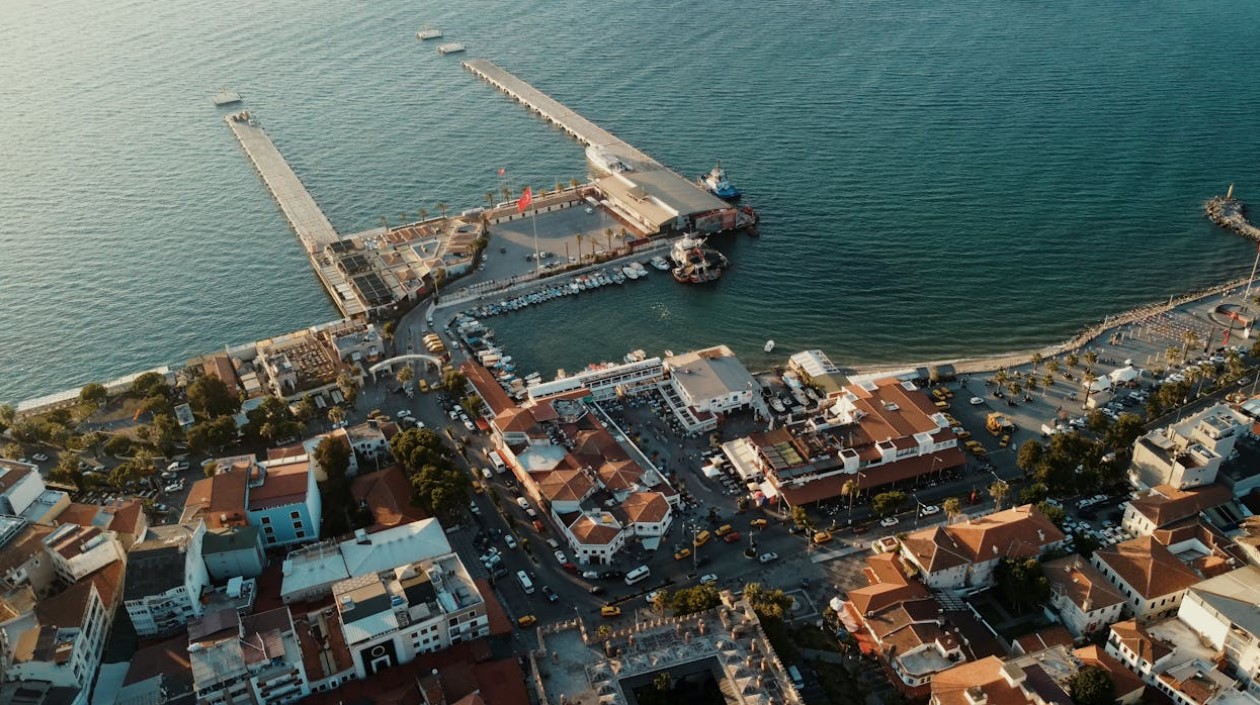
Kuşadası, Aydın, Türkiye. Photo by Julien Goettelmann on Pexels.

The Asian Development Bank (ADB) said it signed a $40 million loan with Arkas Holding to support maritime logistics and port infrastructure upgrades in Türkiye, marking ADB’s first private-sector infrastructure transaction in the country since beginning operations there in October 2025.

The financing will support Arkas Group’s capital expenditure program over the next eight years, including fleet modernization, logistics expansion and port infrastructure investments aimed at improving efficiency and sustainability across shipping routes linking the Black Sea and the Mediterranean.

The transaction reflects growing interest among development finance institutions in strengthening trade corridors and logistics resilience as supply chains across Asia, Europe and the Middle East face rising geopolitical and operational pressures.

ADB said the investment aligns with its strategy to expand private-sector financing in gateway economies and improve connectivity along the Middle Corridor, a trade route linking Asia and Europe through Central Asia, the Caucasus and Türkiye.

As trade volumes grow across regional corridors in Asia, Europe and the Middle East, Türkiye’s position as a logistics gateway is drawing greater attention from development lenders and private infrastructure investors.

The financing is expected to help Arkas improve operational capacity, facilitate smoother cargo flows and support compliance with international environmental and safety standards while reducing fuel consumption and greenhouse gas emissions.

The deal also highlights the increasing role of development finance institutions in supporting maritime decarbonization and sustainable transport infrastructure, particularly in emerging markets positioned along major trade routes.

“Partnering with an established and diversified logistics group is crucial for our first infrastructure investment in Türkiye,” ADB Director General for Central and West Asia Leah Gutierrez said.

Arkas Holding Chairman Lucien Arkas said the investment marks “the first step toward a lasting partnership” that could support the group’s future investments and expansion across the region.

Founded in İzmir in 1902, Arkas Holding operates across maritime transport, port services, integrated logistics, automotive, insurance, information technology and tourism.

IFC weighs €50m risk-sharing facility for cocoa trader Touton

0
IFC Touton

The International Finance Corporation (IFC) is considering an unfunded risk participation of up to 50 million euros ($56 million) in a 150-million-euro trade finance facility arranged by Societe Generale for French cocoa trader Touton S.A., according to project disclosures seen by DevFiNews.

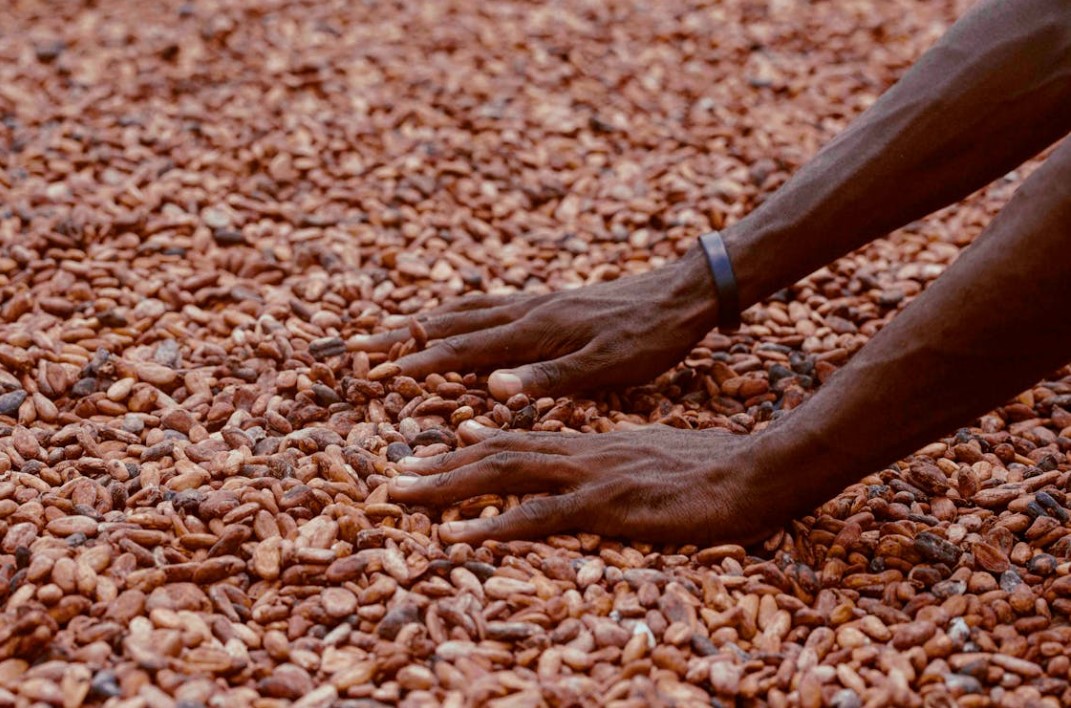
The proposed facility will support the procurement and export of traceable cocoa beans mainly from Côte d’Ivoire, Ghana and Cameroon, three West African markets that are central to global cocoa supply and are eligible for support from the World Bank’s International Development Association.

The transaction comes as cocoa traders and exporters in West Africa face tighter financing conditions following sharp cocoa price volatility and growing scrutiny over sustainability standards in global supply chains.

IFC said it will provide short-term liquidity to the agricultural supply chain at a time when country and obligor limits across West Africa have constrained liquidity for agribusiness trade finance.

The financing is expected to help improve smallholder farmers’ access to cocoa markets, support continued local sourcing of traceable and sustainably produced cocoa beans, and strengthen access to structured trade and working capital finance across the cocoa value chain.

Paris-headquartered Touton is among the world’s largest cocoa traders, purchasing about 350,000 metric tons of cocoa annually and accounting for around 8% of global cocoa trade, according to the disclosure. Cocoa represents about 75% of the group’s revenues.

The proposed transaction also reflects the growing use of risk-sharing structures by development finance institutions and commercial banks to keep trade and working capital flowing into emerging-market commodity supply chains.

Societe Generale has financed Touton for more than 33 years and is a major trade and commodity finance bank active in agricultural commodities, the disclosure said.

IFC classified the project as Category FI-2 under its Sustainability Policy, citing environmental and social risks linked to cocoa sourcing. These include harmful child labor, forced labor, occupational health and safety concerns, and the possible expansion of cocoa farming into natural and protected areas.

Under the arrangement, Societe Generale will add controls tied to traceable and certified cocoa. These include verifying that warehouse receipts submitted for financing correspond to certified beans, limiting storage-financing proceeds to traceable cocoa, and requiring Touton to report annually to IFC on the effectiveness of its supply-chain risk management systems.

The controls underscore the tension in cocoa trade finance: the need to maintain liquidity for exporters and farmers in key producing countries while ensuring that financing does not support supply chains linked to labor abuses or deforestation.